Weeks 1 to 26
You
The problem
Same problems. Different rosters.
The promise
Become the kind of person worth building a program around. Face your ego, own your response, and build the daily disciplines that compound over a career.
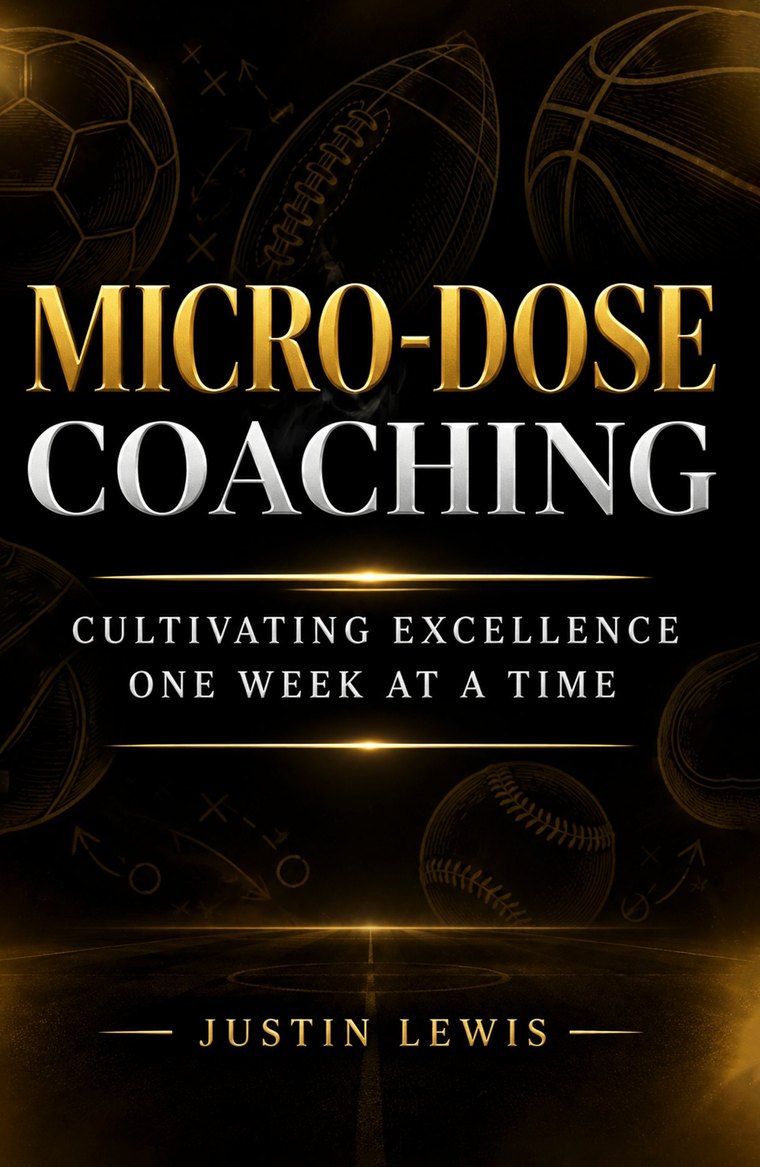
Kindle pre-order now open
Fifty-two weeks of the inner work most coaches never do, from a Division I hitting coach who spent a decade in the fire service and made every mistake in this book first. One dose a week is enough to start becoming the coach your players remember at thirty-five.
Pre-order your copy
Releases January 20, 2027
Paperback & hardcover pre-orders open soon.
Get notifiedOne week. One dose. One honest look in the mirror.
About the book
Coaches who keep inheriting "bad groups" carry the same problems from roster to roster. Micro-Dose Coaching moves through three territories, and each one starts with an honest look at the person holding the whistle.
The problem
Same problems. Different rosters.
The promise
Become the kind of person worth building a program around. Face your ego, own your response, and build the daily disciplines that compound over a career.
The problem
Players who feel managed instead of known.
The promise
Build relationships before you need them and have the hard conversations you've been putting off. Your players, staff, recruits and their families all feel the difference.
The problem
Standards that bend when they should hold.
The promise
Build culture on purpose, every day. Set standards your team helped write and remove the toxicity that quietly costs you games.
How each dose works
Read one dose a week, sit with it for a few days, and take it into a real situation before you move on. Or read it cover to cover and then go back. The only wrong move is putting it back on the shelf.
Real moments from dugouts, firehouses and living rooms. Mistakes included.
The one idea worth carrying out of the week, stated plainly.
Reflection questions that hold up a mirror you can't talk your way around.
One concrete action for your program this week, plus journal lines to write it down.
Inside the book
Free chapter
WEEK 1
Have you ever watched Cesar Millan work? If you haven't, go find an episode right now. I'll wait.
For those of you who have, you know exactly what happens every single episode. Someone calls Cesar in because their dog is out of control. It's aggressive, anxious, destructive, a total disaster. The owners are frustrated, exhausted, and completely convinced that the dog is the problem. And then Cesar shows up.
Cesar almost never fixes the dog.
He fixes the owner.
He watches the owner walk the dog for about thirty seconds and sees everything he needs to see. The leash is too loose. The owner's shoulders are tense. They're talking to the dog in a high-pitched, anxious voice that communicates panic instead of calm. They stop every time the dog pulls, which teaches the dog that pulling works. The owner thinks they're doing everything right. They've been doing it this way for years. And the whole time, the dog has just been responding to the energy in front of it.
Cesar resets the owner. Calm, assertive energy. Structured walk. Clear expectations. Consistent follow-through.
The dog? Fine twenty minutes later.
Sit with that for a second before you keep reading. Because if you're a coach, whether you're running a Division I program, coaching a high school team, leading a sales floor, or managing a department, you need to honestly ask yourself something.
How many times have you been the owner?
I was the owner. I just didn't know it yet.
When I arrived at Fresno State as the hitting coach, I walked into a complicated situation. The previous hitting coach had quit on the team in October. He was popular with the returners. There was no fall season because of COVID. These players were already unsettled, already grieving a guy they liked, already anxious about a season that hadn't even started yet. And what did I do? I tried to be him.
I told myself it was the right move. Keep the structure they knew. Don't disrupt things further. Ease into it. But what I wasn't willing to look at yet was that I wasn't being selfless. I was afraid. I was so worried about being accepted that I abandoned the one thing that had always made me an effective coach: my relationships. I'm a connection guy. My coaching only works when players know I genuinely love them and want nothing but the best for them. I threw all of that out the window trying to impersonate someone else.
We lost our opener to UCLA. Then we got swept in a doubleheader by LMU, a team we had no business losing to. And then I started hearing it. Players were blaming me. Saying I was unprepared. Saying I didn't know what I was doing.
My first reaction, and I want to be honest about this because it's important, was to defend myself. I wanted to pull out the data. Show them the bad pitches they'd swung at. Transfer the blame right back. Make it their problem.
That's the owner yanking the leash harder when the dog acts up.
So instead, and I credit re-reading Ryan Holiday's The Obstacle Is The Way at exactly the right moment, I called a meeting with about ten of the returning hitters and did the hardest thing I've ever done as a coach.
I took the responsibility. All of it.
I told them I hadn't given them what they needed. Then I shut up and listened. They let me have it. Some of it was valid. Some of it wasn't. But I wasn't there to be right. I was there to get it right. I asked them what they needed from me. I gave it to them. And then I decided that if I was going down, I was going down as myself.
By the end of that season we led the Mountain West Conference in every offensive category and went to the NCAA Tournament for the first time in five years.
The team didn't change. I did.
This is the hardest lesson in coaching and it's also the first one, which is why it's Week 1.
Every struggling coach I've ever known has a story about a difficult player, a bad group, a team that just wouldn't buy in. And maybe some of that is true. Players can be difficult. Groups can be toxic. Culture can be poisoned before you ever walk in the door.
But notice something. The coaches who seem to always have "bad groups" have them everywhere they go. New school, same problems. New players, same drama. New staff, same dysfunction. At some point you have to ask the only question that actually matters:
What's the common denominator?
Cesar Millan would know the answer in thirty seconds.
The dog isn't the problem.
The most important work you'll ever do as a coach has nothing to do with your players. It has to do with you, your self-awareness, your energy, your blind spots, your unresolved stuff that you carry into the building every single day and hand off to your team without even realizing it. More is caught than taught. And if what your team is catching is anxiety, insecurity, blame, and inconsistency, that's the environment you're building. Every single day.
The good news? You can fix it. Cesar proves that every episode.
But you have to be willing to be the owner first.
THE LESSON
Before you can build anything, a team, a culture, a program worth a damn, you have to become the kind of person worth building it around. That work starts with you. Not your roster. Not your administration. Not your budget. You.
SIT WITH IT
Think about the last time something went wrong in your program. Be honest, really honest. How quickly did your mind go to external reasons? Players not buying in, administration not supporting you, parents causing problems, last year's coach leaving a mess? Now ask yourself: what was your role in it? Not their role. Yours. What did you bring into that situation that made it worse or kept it from getting better? Sit with that. It's uncomfortable. It's supposed to be.
THE WORK
Find one situation in your program right now that you've been privately blaming on someone else. Write it down. Then write down three specific things, not things they need to change, but things you need to change, that could move the needle on that situation. You don't have to share it with anyone. This one is just for you. But write it down, because the act of writing it means you can no longer pretend you didn't see it.
Early praise
Endorsement goes here. Two or three sentences from a head coach about what the book did for them or their staff.
Reviewer Name
Head Coach, Program
Featured endorsement goes here. Use your strongest name in this middle card since it gets the gold border.
Reviewer Name
Title, Organization
Endorsement goes here. A former player or a leader outside sports shows the book reaches beyond the dugout.
Reviewer Name
Title, Organization
About the author
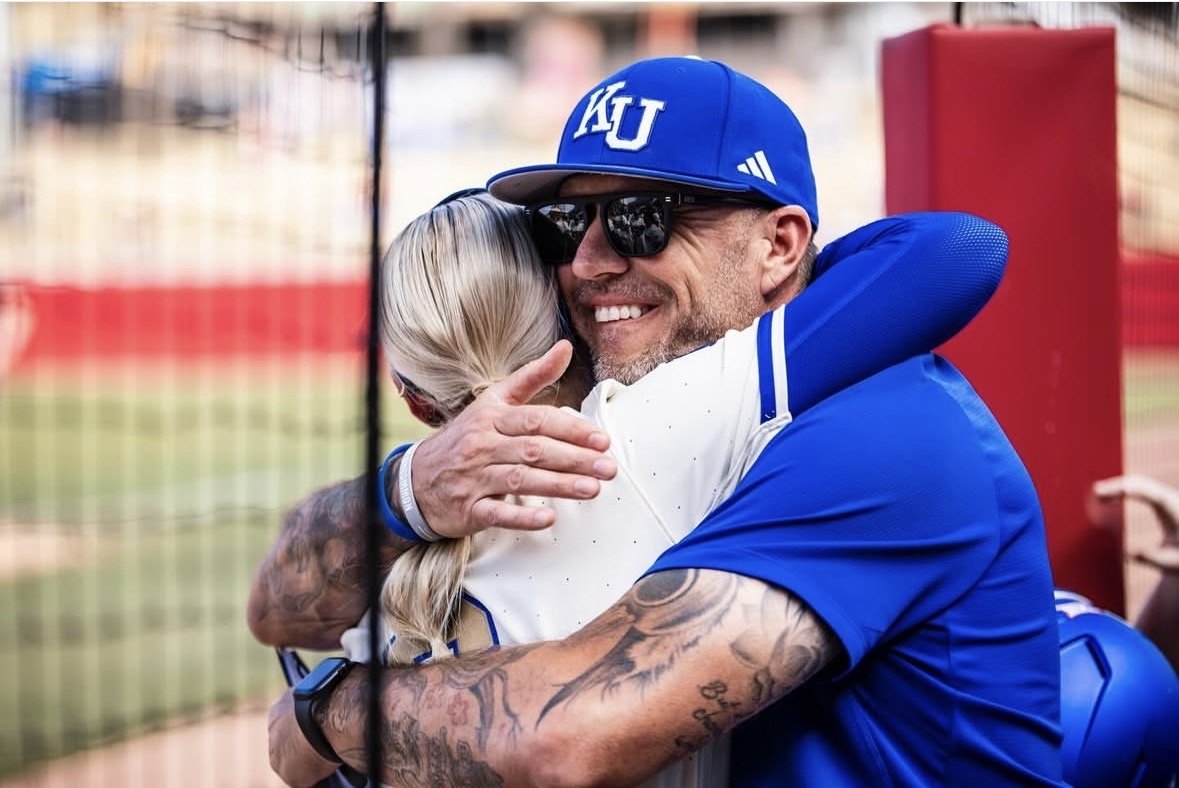
Justin Lewis is the hitting coach at the University of Kansas. He has coached at the high school, junior college, Division II and Division I levels, and he spent ten years in the fire service learning what leadership looks like when the consequences are real.
He founded a nonprofit for families affected by autism after his son Jack's diagnosis. He left coaching for fifteen years, came back at forty, and earned his master's along the way. For eight years he wrote an annual letter to former players called Things I Think You Should Know. Those letters became this book.
He wrote it because he needed it and it didn't exist.
Speaking and team workshops:
In order for things to change, you have to change. In order for things to get better, you have to get better.